
In a clinical setting, missing a high-touch surface is a major medical risk, not just a checklist mistake. When a janitorial vendor subcontracts this work, risk oversight often disappears. It stays hidden from leaders until an audit fails or an outbreak occurs. Clinical spaces require a level of precision that traditional commercial cleaning models cannot provide.
The short answer
Adhering to medical facility cleaning standards requires a W-2 cleaning workforce to meet strict CDC and EPA requirements. Subcontracting creates a compliance gap by removing direct oversight. A dedicated, directly employed team ensures high-touch surface disinfection and medical waste handling follow auditable rules every shift.
Environmental cleaning as infection prevention
Environmental cleaning serves as the primary defense against healthcare-associated infections (HAIs). Standard procedures for high-touch surfaces, like bed rails, light switches, and door handles, are key for infection control (CDC). Without a consistent team, these critical touchpoints receive inconsistent attention.
The dual-method approach
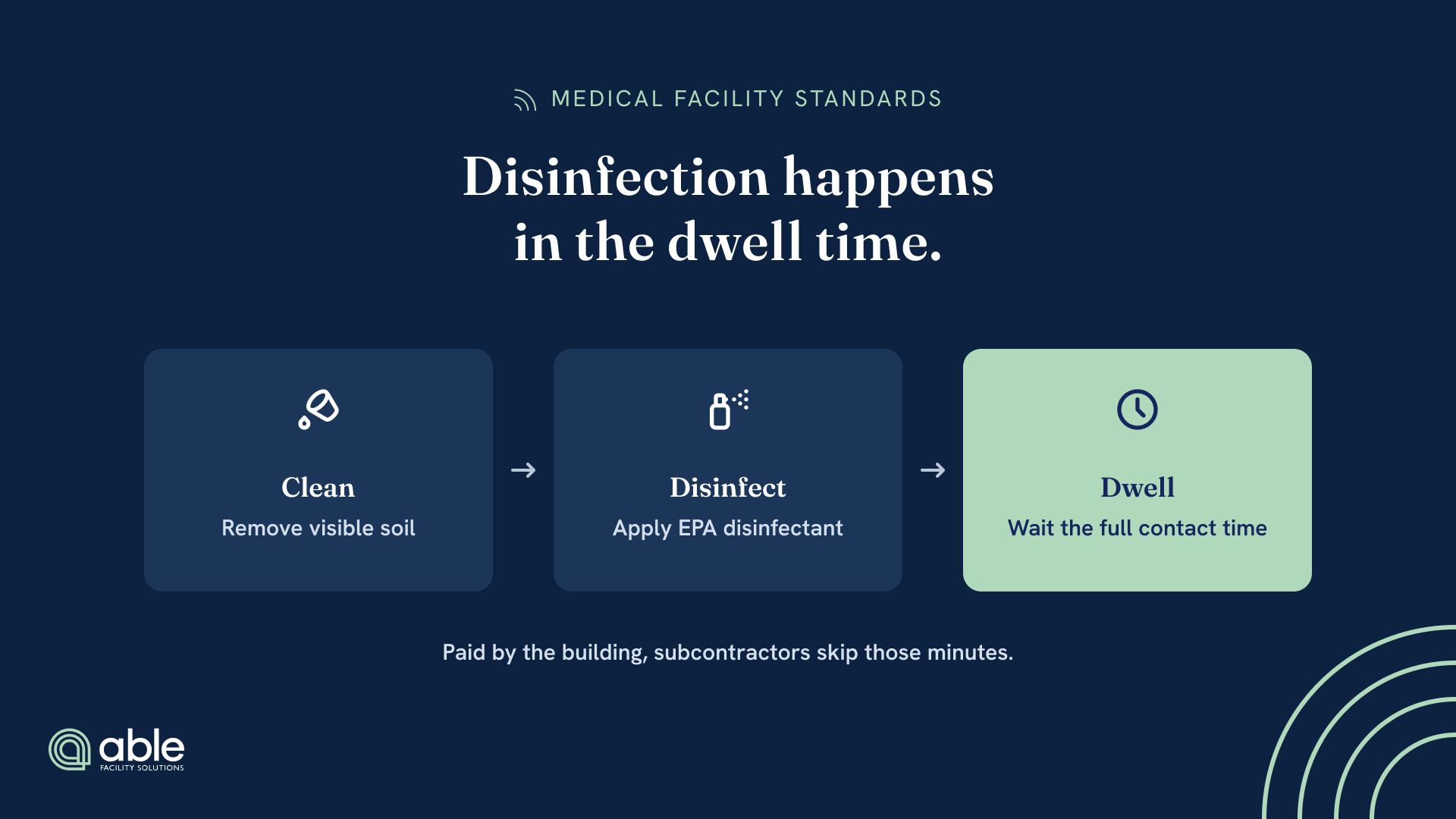
Effective healthcare janitorial services require a process that goes beyond a quick wipe-down. The US EPA mandates a dual-method approach that combines routine cleaning with targeted disinfection. This process requires specific dwell times for chemicals to eliminate pathogens. A subcontracted worker paid by the building, not by the hour, may skip critical minutes. This can help them finish faster. It also increases compliance traps for the facility.
Managing medical waste handling protocols
Specialized medical waste handling protocols require rigorous training. Improper disposal of biohazardous materials carries heavy legal and safety consequences. When a vendor does the work themselves, they keep direct control of training records. They also control safety certifications for everyone who enters the facility.
The risks of the subcontracted model
Subcontracting introduces fragmentation into high-stakes environments. Fragmented labor models often lack the direct oversight required for zero-error execution. If a facility manager cannot verify the training history of a cleaner, they cannot guarantee compliance with clinical requirements.
| Feature | Subcontracted (1099) | Self-Performed (W-2) |
|---|---|---|
| Training Oversight | Third-party managed | Direct and documented |
| Quality Accountability | Diluted via middleman | Direct line of sight |
| Protocol Adherence | Variable and inconsistent | Standardized and audited |
| Safety Compliance | Higher liability risk | Managed and insured |
Common punch-list flags to pre-empt:
- Inconsistent dwell times for disinfectants on high-touch surfaces
- Improper labeling or storage of biohazardous waste containers
- High turnover leading to untrained staff on clinical floors
- Lack of documented cleaning logs for exam rooms and surgical suites
- Missing documentation for specialized healthcare marketing experts who need to verify facility compliance for patient growth campaigns
FAQ
What is the difference between cleaning and disinfection?
Cleaning removes visible soil and dirt, while disinfection uses chemicals to kill pathogens. In a medical setting, both must be performed to meet safety standards.
Why is a W-2 workforce safer for clinics?
Direct employees are covered by the company's insurance and receive standardized training. They answer to a direct supervisor, which creates a clear chain of accountability.
How does this impact HAI rates?
Consistent disinfection of high-touch surfaces significantly reduces pathogens. This remains a primary driver in lowering infection rates across professional clinical environments.
Does your current vendor meet these clinical standards? Book a call with us today for a facility audit regarding our self-performed teams and clinical disinfection protocols.