
Most K-12 cleaning standards focus on the appearance of clean, a shiny floor or empty trash bins. However, a facility that looks tidy isn't necessarily a healthy one. For school leaders, the gap between what looks clean and what is truly clean affects student absences. It also affects the life of multi-million dollar campus assets.
Florence Nightingale transformed hospital sanitation into a life-saving discipline. It saved more lives than any medical breakthrough of her era. She explained the difference with unmistakable clarity:
“"The very first requirement in a hospital is that it should do the sick no harm." - Florence Nightingale”
The short answer
Effective school custodial program scoping requires a shift from fixed labor hours to evidence-based frequencies. By setting cleaning schedules by room type and high-touch risk, administrators can improve health outcomes. They can also extend the life of surfaces like VCT flooring and HVAC systems. This approach balances the budget by prioritizing high-impact hygiene over low-traffic aesthetics.
Why school custodial program scoping requires room-based logic
Not every space on campus requires the same level of care. A high-traffic cafeteria needs a different disinfection schedule than a faculty office or a storage room. Horace Mann was an education reformer. He helped build the American public school system. In the 1840s, he said something that still fits this job today. It describes the role of the K-12 custodial program
“"A teacher who is attempting to teach without inspiring the pupil with a desire to learn is hammering on cold iron." - Horace Mann”
According to the CDC, targeted disinfection in schools is vital. It helps reduce the spread of infectious diseases. It also lowers student absenteeism.
| Room type | Standard frequency | Primary focus |
|---|---|---|
| Classrooms | Daily | High-touch disinfection and dust control |
| Restrooms | Multiple times daily | Sanitation and odor control |
| Corridors | Daily | Floor preservation and debris removal |
| Admin offices | 2-3 times weekly | General dusting and trash removal |
Managing university facility management and asset longevity
In the context of university facility management, flooring represents one of the largest capital investments on campus. Vinyl Composition Tile (VCT) is a staple in educational design, but it requires specific preventative floor maintenance to last. Without a structured office cleaning frequency plan, these floors can lose their protective layer. This can cause permanent damage and replacement costs up to 30% higher.
“"A surface that looks clean and a surface that is disinfected are not the same thing, and your occupants’ health depends on the difference."”
Setting campus janitorial services for air quality
Indoor air quality is a major factor in student performance. Using green cleaning standards ensures that students and staff are not exposed to harsh chemicals. EPA studies link low-VOC cleaning programs to improved cognitive function and better student health outcomes.
Key components of a healthy campus program
- HEPA-filtration vacuums to capture fine allergens and dust
- Microfiber technology to prevent cross-contamination between rooms
- Color-coded cleaning tools for restrooms versus cafeteria spaces
- Regular commercial floor refinishing to prevent dirt buildup
- Documented dwell times for all EPA-registered disinfectants
Common pitfalls in K-12 cleaning standards
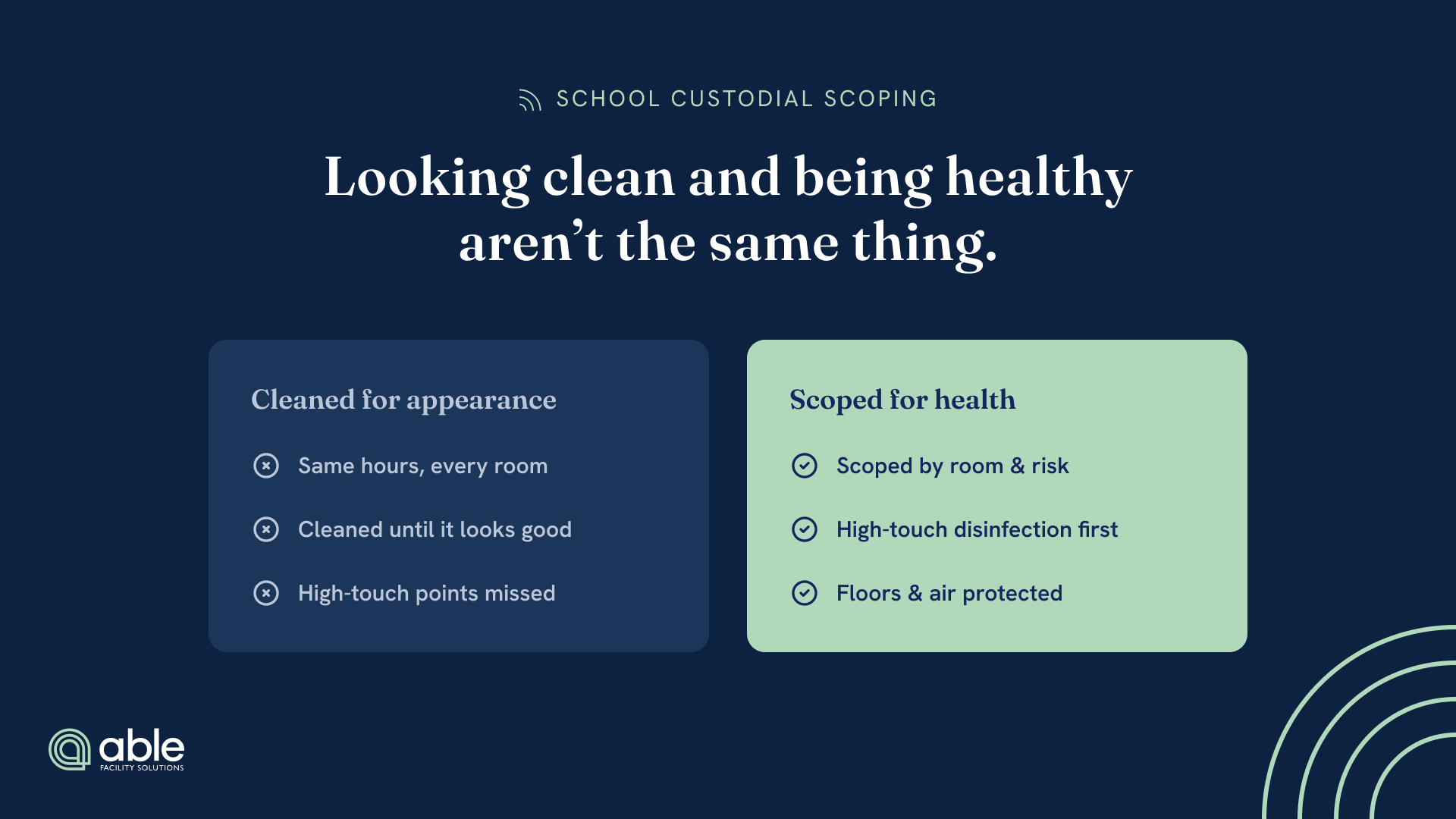
The most common mistake in campus janitorial services is the "clean until it looks good" approach. This leads to over-cleaning low-traffic areas while neglecting high-touch points like door handles, shared keyboards, and water fountains. A well-scoped program uses APPA cleaning levels to align staffing with the specific needs of each building wing.
FAQ
What are APPA cleaning levels for schools?
APPA guidelines define five levels of cleaning, ranging from Level 1 (Orderly Tidiness) to Level 5 (Unkempt Neglect). These levels help school boards set staffing needs. They match headcount to cleanliness goals by room type and square footage.
How does custodial scoping affect student performance?
Reducing allergens and pathogens through low-VOC cleaning and consistent disinfection leads to lower absenteeism and higher concentration levels. High-quality air filtration and chemical management are directly linked to better cognitive performance in K-12 environments.
Why is VCT maintenance so important for educational budgets?
VCT is durable but porous. Regular stripping and waxing prevent dirt from becoming embedded in the tile. When you ignore a consistent floor care cadence, tile can get permanent scratches and stains. This can force early, costly replacement.
Ready to align your cleaning frequencies with health and asset preservation goals? Book a call with Able Facility Solutions for a custom campus audit today.